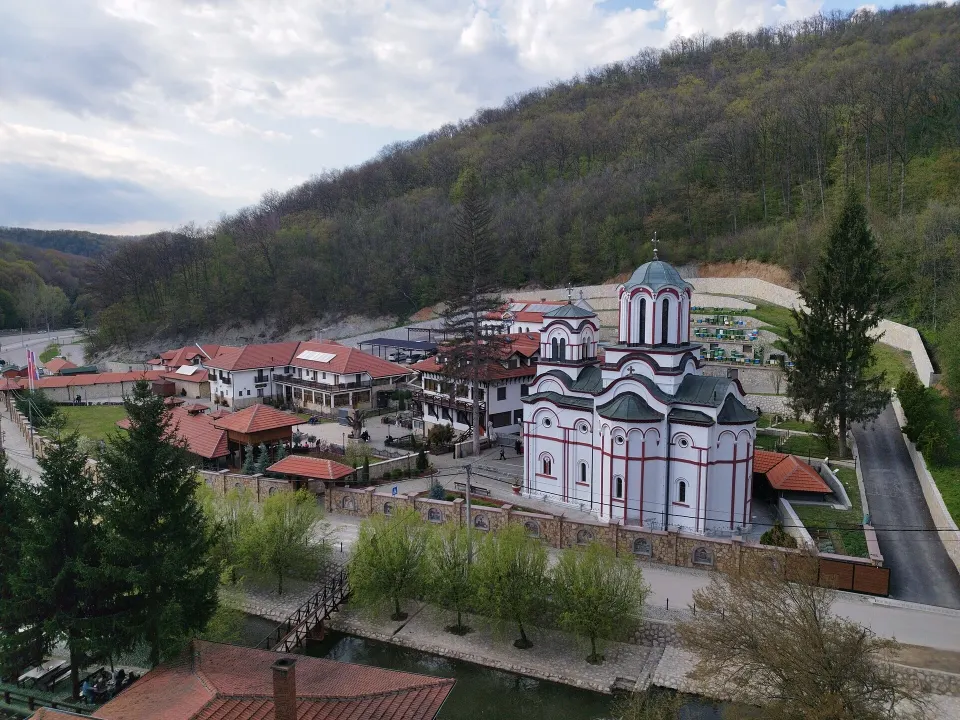
Tumane Monastery, tucked away in the wooded valley of the Tumane River near Golubac, has grown over the past decade into one of the most visited holy sites in Serbia — an estimated one million people come here every year. It sits about 35 kilometers from Silver Lake (Srebrno jezero), making a visit here one of the loveliest half-day trips for anyone staying at the lake. In this guide you'll discover its unusual history, learn about the saints whose relics rest in the church, and find out the opening hours, the rules for visitors, and how to get there without losing your way.
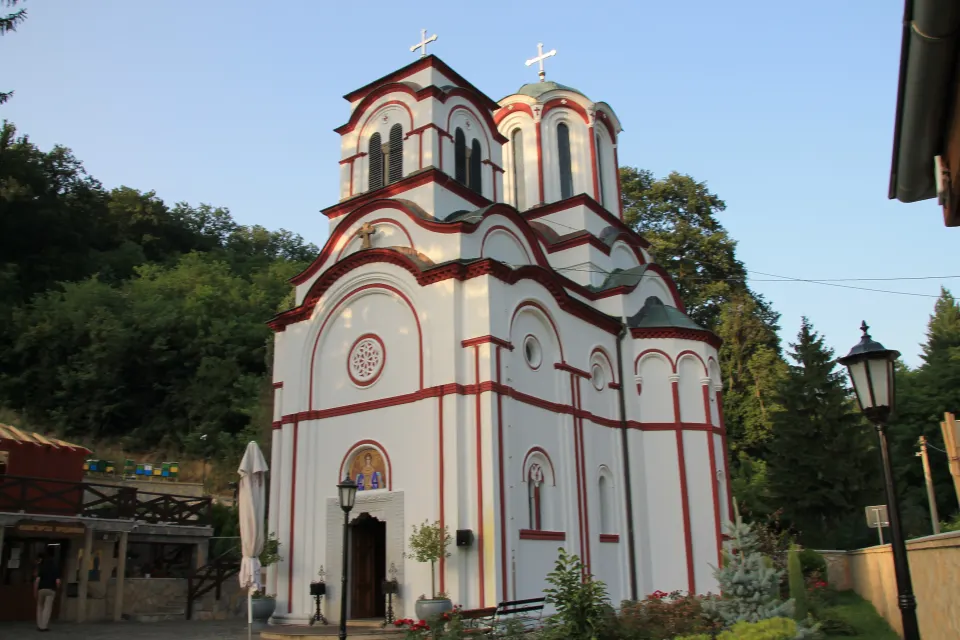
The Legend of Miloš Obilić and How the Monastery Got Its Name
According to legend, Tumane Monastery was founded in the second half of the 14th century by Miloš Obilić, the hero of the Battle of Kosovo, who held estates in these parts and often came here to hunt. One day, aiming at game, he accidentally struck the hermit monk Zosim with an arrow — the ascetic had been living in prayer in a cave above the Tumane River.
Miloš carried the wounded elder toward his manor to find him a cure, but Zosim, sensing his end was near, pleaded with him: "Tu mani me" — "Leave me here and let me die." Those words, "tu mani," are believed to have given the monastery its name. In repentance for his unintended sin, Miloš began building a church on that very spot, and legend has it that the construction was cut short by Prince Lazar's call to battle in Kosovo.
Over the centuries the monastery was destroyed and rebuilt several times. The old church, badly dilapidated, was torn down in 1910, and the present church, dedicated to the Synaxis of the Holy Archangel Gabriel, was completed in 1924, its construction delayed by the Balkan Wars and the First World War.
Saint Zosim the Sinaite and Saint Jakov of Tumane
The monastery's greatest treasure is the relics of two saints, displayed in the church, before which hundreds of pilgrims pray every day. It is because of them that Tumane is often called "the Serbian Ostrog."
Saint Zosim the Sinaite
Zosim came to Serbia in the second half of the 14th century with a group of Sinaite monks who, under the patronage of Prince Lazar, sought quiet places for prayer and ascetic life. He lived as a hermit in a cave near the present-day monastery, and for centuries the faithful have regarded his relics as miracle-working. By a decision of the Assembly of the Serbian Orthodox Church in 1992, he was officially numbered among the Serbian saints, together with eight other Sinaites.
Saint Jakov the New of Tumane
Saint Jakov, born Radoje Arsović (1894–1946), was an exceptionally educated man — he earned two doctorates in France, in philosophy and in law — who traded a worldly career for a strict monastic life and died at Tumane with a reputation for holiness. His relics were uncovered in October 2014, and in May 2017 the Assembly of the Serbian Orthodox Church canonized him as Venerable Jakov the New of Tumane. The joint feast day of both saints is celebrated on August 21, when the monastery welcomes its largest crowds of the year.
Why Tumane Is One of Serbia's Most Visited Holy Sites
The turning point came in 2014, when a new male brotherhood arrived at the monastery and a major restoration of the church, the lodgings and the grounds began. That same year the relics of Saint Jakov were uncovered, and believers' testimonies of answered prayers and healings began drawing pilgrims from all over Serbia, the wider region and the diaspora.
Today Tumane receives both individual visitors and entire busloads of pilgrims every day. People come to venerate the relics, pray for good health, submit names for prayer intentions and take home blessed oil. There is no entrance fee, and donations are voluntary.
The biggest crowds gather on the monastery's patron feast, the Synaxis of the Holy Archangel Gabriel on July 26, on the feast of Saints Zosim and Jakov on August 21, and on weekends. If you'd prefer a quieter visit, come on a weekday morning — you'll have time for both the church and the walk to the hermitage.
The Hermitage of Saint Zosim
About a kilometer from the monastery, along a well-kept forest path, lies the hermitage where Zosim lived his ascetic life. Two connected caves sit in the rock face: the saint lived in one and prayed in the other — a chapel now stands on the site of his prayer cell. The hermitage was restored and consecrated in 2017.
Beside the hermitage flows a spring whose water the faithful consider healing, and just behind it a forest stream tumbles in small waterfalls over travertine terraces. The easy walk from the monastery takes 15–20 minutes each way and is beautiful in every season.
Tip: Wear comfortable shoes with good grip for the climb to the hermitage — the path is well maintained, but the final stretch is rocky and can get slippery after rain. Bring an empty bottle too, and fill it with water from the spring.
How to Get to Tumane Monastery from Silver Lake
The monastery stands near the village of Snegotin, nine kilometers from Golubac. From Silver Lake the drive is about 35 kilometers, or 30–40 minutes each way.
- From the lake, head back to Veliko Gradište and continue along the Danube road toward Golubac.
- Follow the brown tourist signs for Tumane Monastery — the turn-off from the main road is clearly marked.
- The last few kilometers follow a paved road through the forest, along the valley of the Tumane River, right up to the monastery complex.
There is no direct public transport to the monastery, so the easiest way is to drive yourself or join one of the organized excursions offered at the lake in summer. If you're staying in an apartment at Silver Lake, Tumane makes an ideal morning trip: leave after breakfast and you'll be back on the beach by lunchtime.
The visit pairs nicely with Golubac Fortress, about fifteen kilometers from the monastery, so in a single day you can see both a sacred site and the most beautiful fortress on the Danube. You'll find more ideas for your whole stay in our overview of day trips around Silver Lake.
Opening Hours and Service Schedule
The monastery is open to visitors every day of the week. The schedule below is accurate at the time of writing — check it on the monastery's official website before you set off, as it changes on major feast days.
| What | When |
|---|---|
| Monastery open to visitors | every day, 08.00–17.00 |
| Holy Liturgy (weekdays) | 08.00 |
| Holy Liturgy (Saturday, Sunday, feast days) | 09.00 |
| Reading of prayers | 09.00–17.00 |
| Vespers | 17.00 |
If you want to attend the liturgy on a weekend, arrive at least half an hour early — the parking lot and the courtyard fill up quickly, and the line to venerate the relics after the service can be long.
Etiquette and Dress Code
Tumane is an active monastery with a strict monastic rule, so visitors are expected to behave in a manner befitting a holy place:
- Dress modestly — shoulders and knees covered; avoid shorts, miniskirts and tank tops. A headscarf is not required for women, but modest clothing is a sign of respect.
- Speak quietly in the church and the courtyard and silence your phone; during services, enter and leave discreetly.
- Feel free to photograph the courtyard and the surrounding nature, but ask for a blessing before filming inside the church or photographing the monks.
- Candles are lit in the designated area, and names for prayer intentions are submitted at the church shop.
Pilgrim Lodgings and the Monastery Shop
For pilgrims who wish to stay longer than a day, the monastery has a guesthouse with comfortable rooms. Booking is required and is done in advance through the online system on the monastery's official website; staying there means respecting the monastery's schedule and its peace.
In the courtyard there is a well-stocked monastery shop where the brotherhood sells honey and honey products, teas, tinctures, balms and natural cosmetics, as well as icons, prayer ropes, books and candles. Part of the range is also available in the monastery's online shop, with delivery within Serbia — handy if you want to send someone a gift even after you've returned home.
Whether you're drawn by faith, curiosity or a love of nature, Tumane leaves a lasting impression: a quiet forest valley, the murmur of the river and a sense of peace you rarely find anywhere else. If you're still planning your stay in this part of Serbia, take a look at our comprehensive Silver Lake guide — Tumane Monastery sits near the top of its list of must-do trips, and for good reason.
Tumane Monastery in pictures
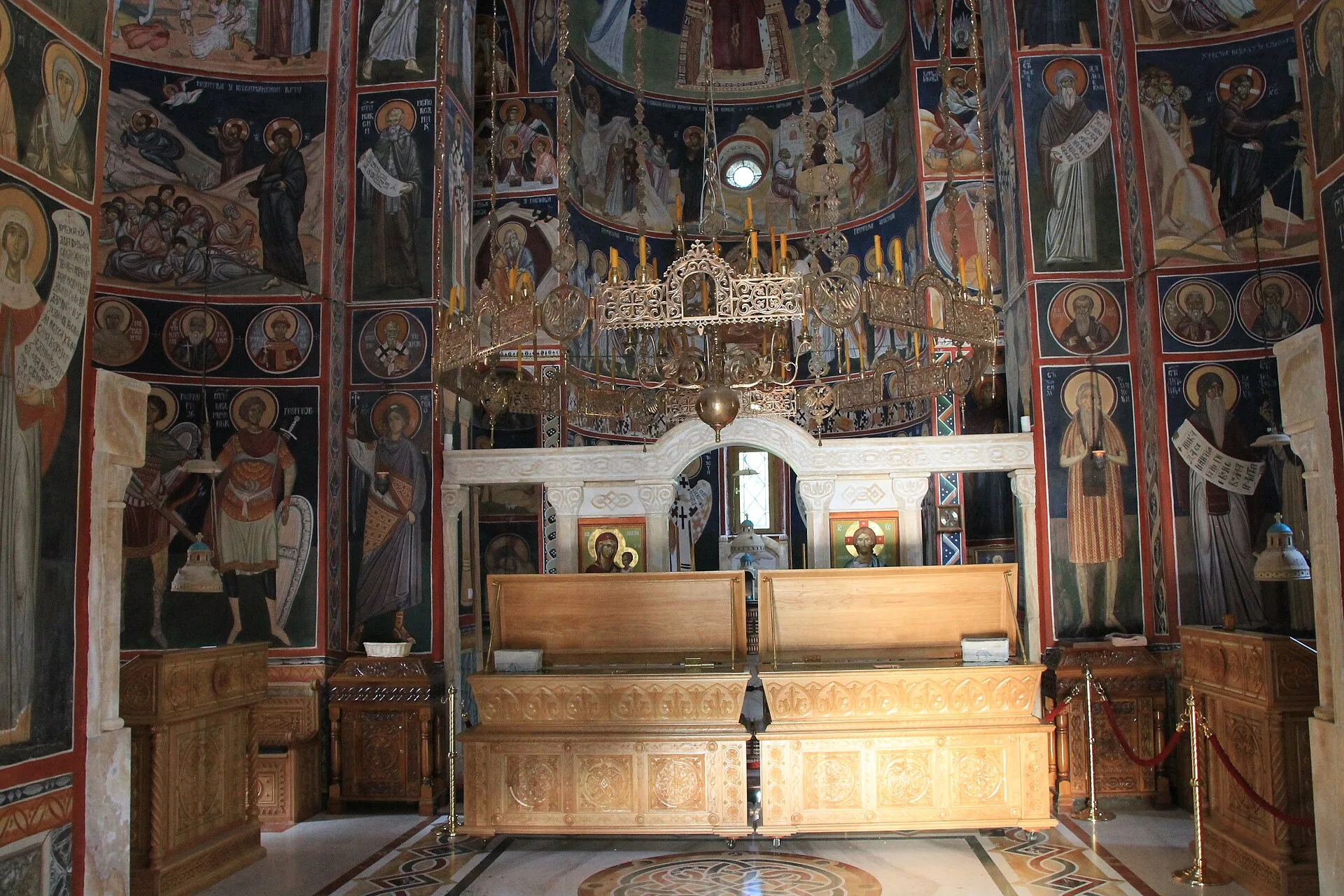
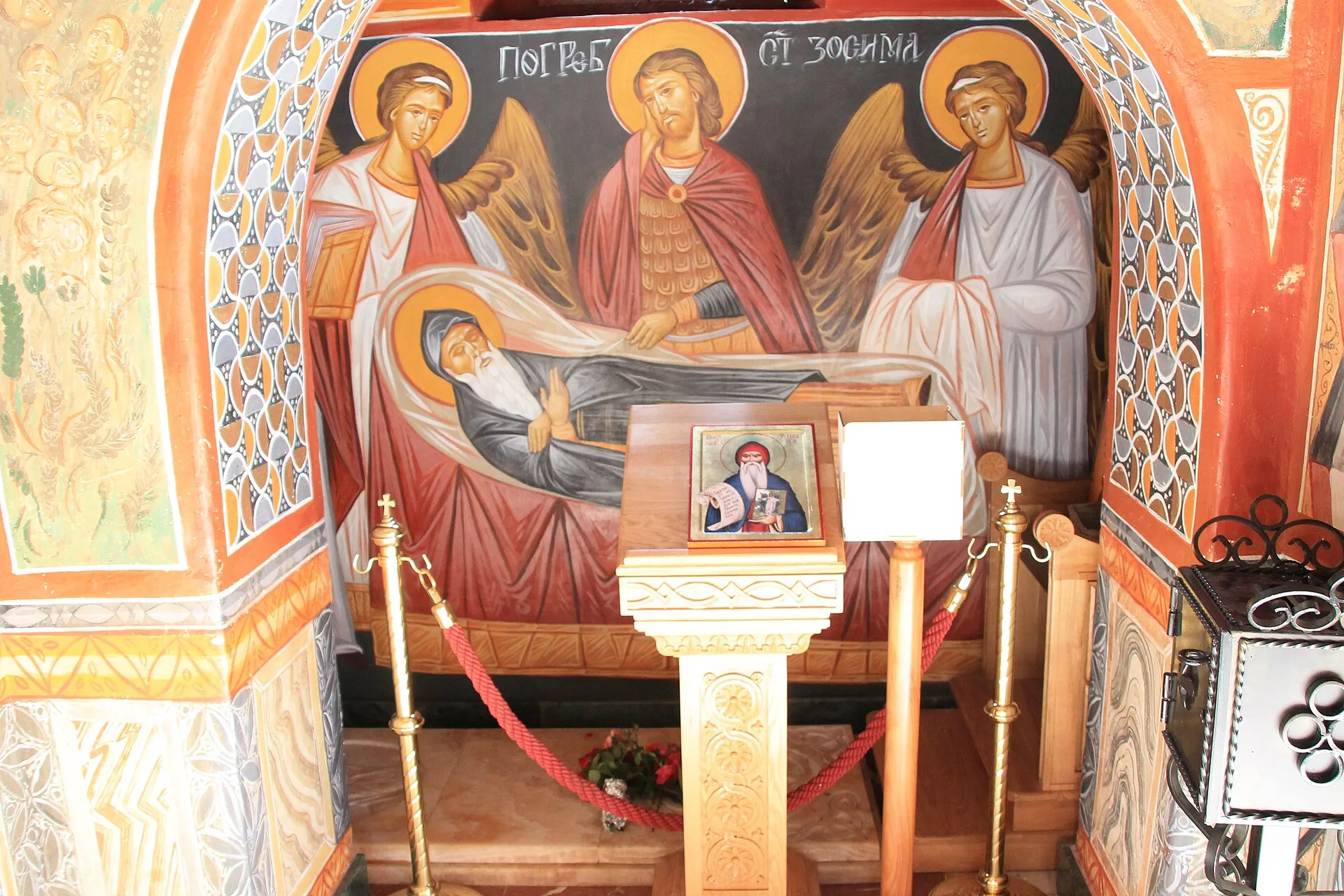
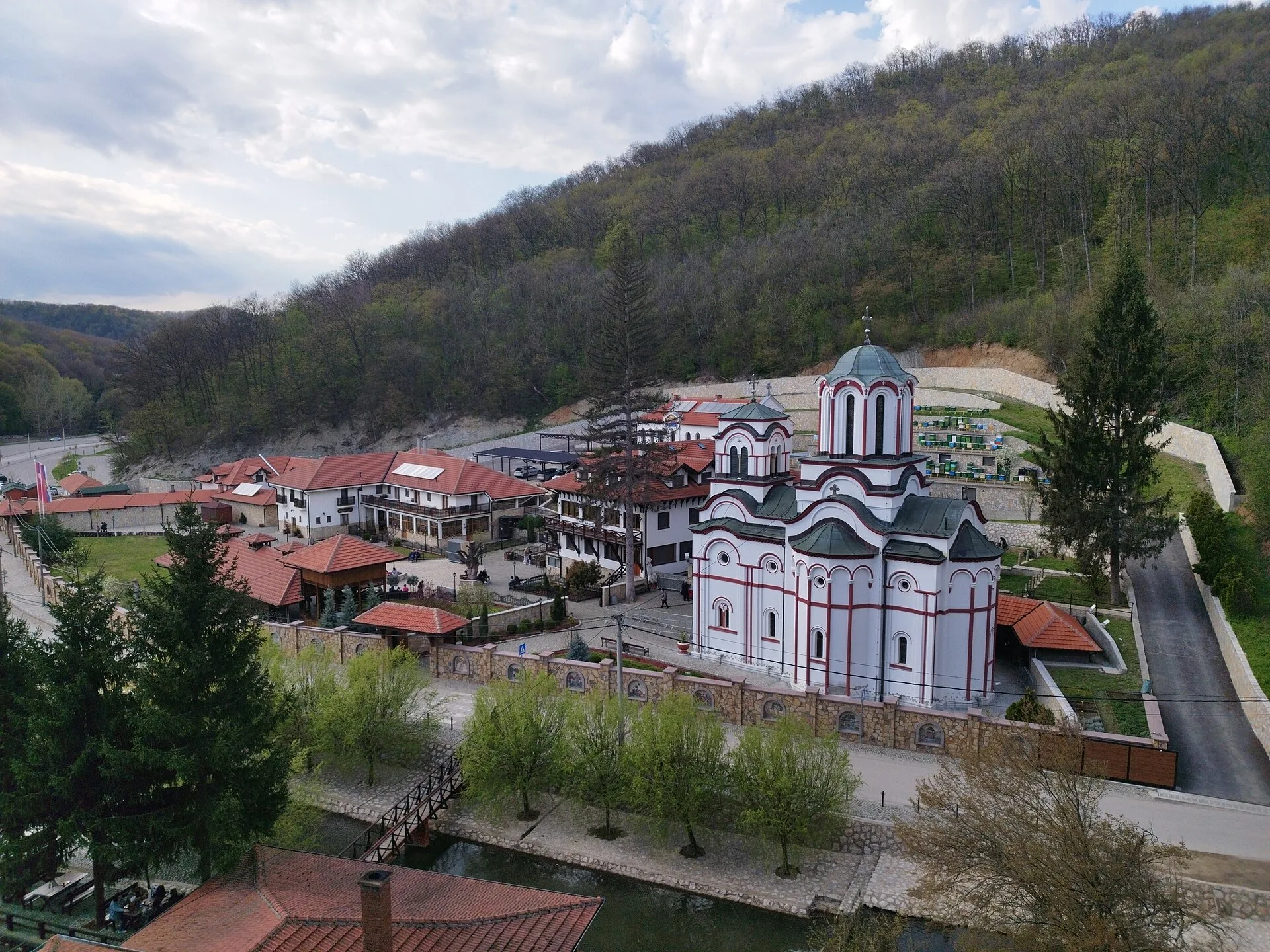
Photo: Vanilica, CC BY-SA 4.0, Wikimedia Commons · Photo: Limes Sorabicus, CC0, Wikimedia Commons