Veliko Gradište is a small town on the right bank of the Danube, just two to three kilometers from Silver Lake (Srebrno jezero) — close enough to walk there along the river, yet enough of a "real" town to do your market shopping, have a coffee on the square and get a feel for everyday life in a Danube town that remembers Roman legions and 19th-century merchants alike. In this guide you'll learn what to see in Veliko Gradište in half a day: its history from Roman Pincum to a thriving merchant town, the sights of the old town core, the Danube quay and the Carevac Promenade, events such as Carevac Days and the great August fair, plus all the practical details — from market opening hours to the health center.
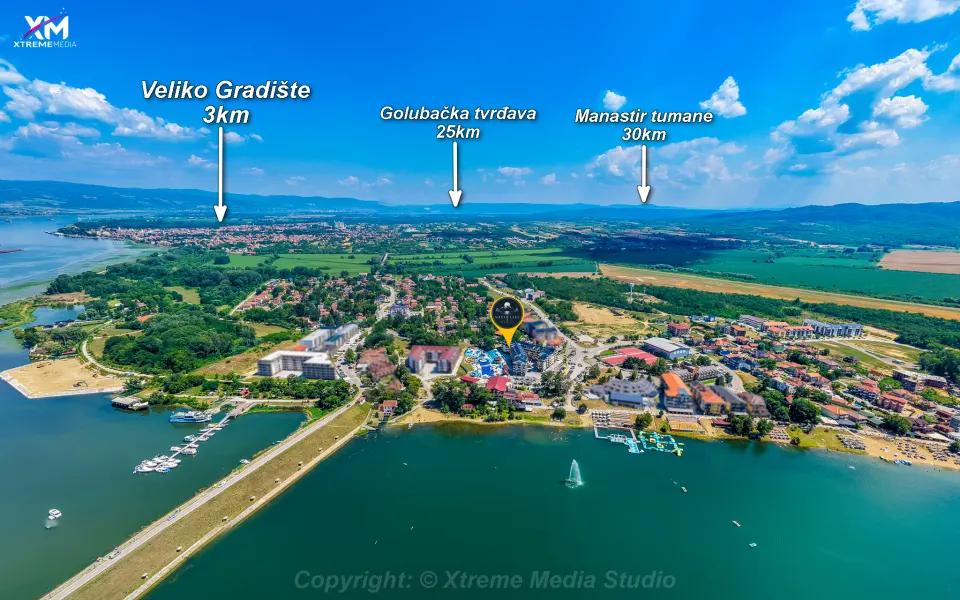
Where is Veliko Gradište and how far is it from Silver Lake?
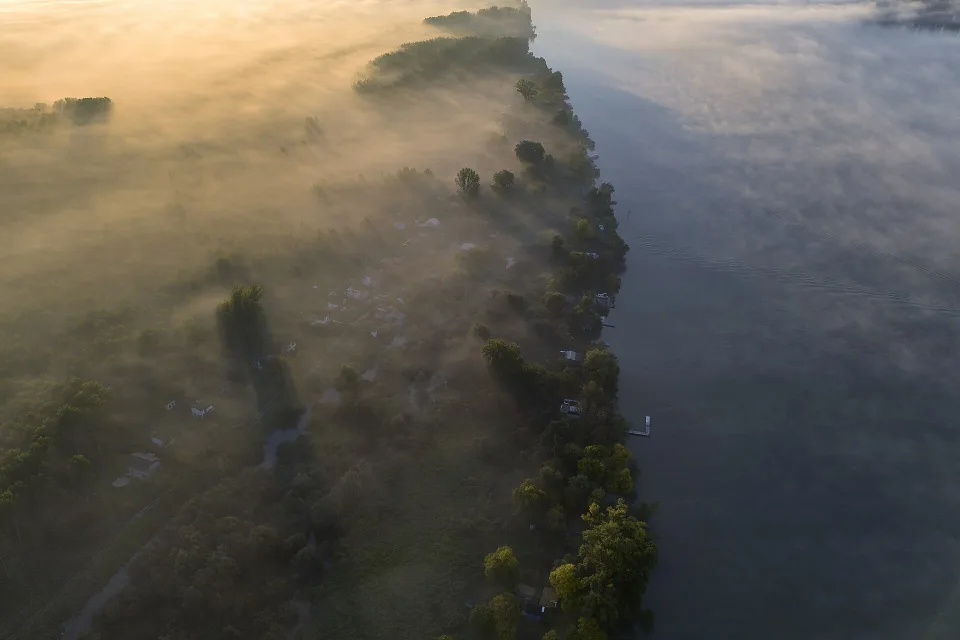
Veliko Gradište sits at kilometer 1,059 of the Danube, at the mouth of the Pek River, just before the entrance to the Iron Gates (Đerdap) gorge — from the quay you can see the foothills of the Carpathians in Romania across the water. The town has around 5,500 inhabitants and is the seat of the municipality of the same name in the Braničevo District. It lies about 110 kilometers from Belgrade (an hour and a half via the highway to Požarevac and then the main road — we describe the routes in detail in our guide on how to get to Silver Lake), and 35 kilometers from Požarevac.
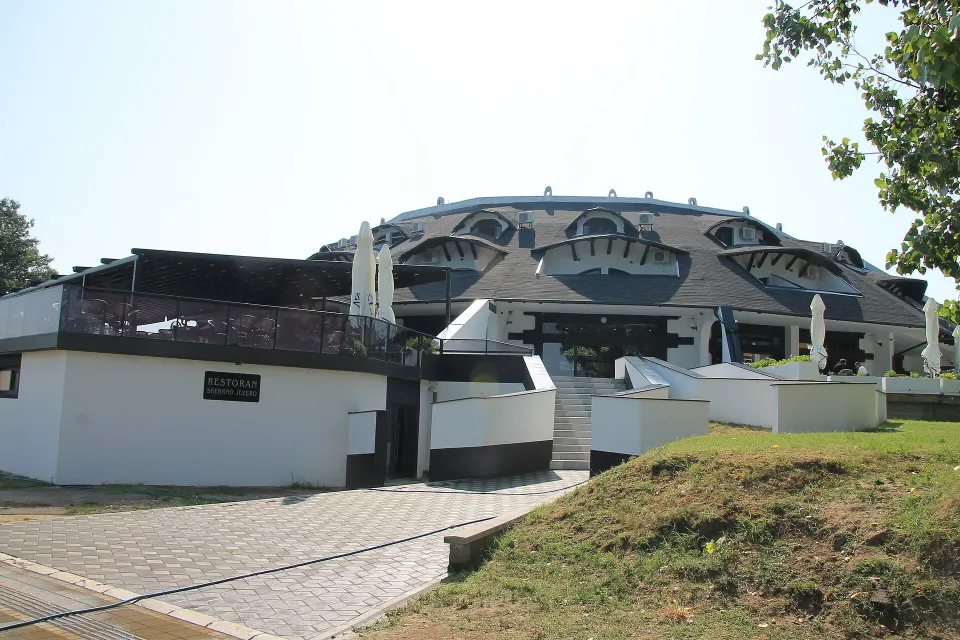
For lake guests, this is the key fact: the center of Veliko Gradište is about 2 km from Silver Lake, and about 3 km from the Beli Bagrem resort area — a five-minute drive. Town and lake are linked by the paved Carevac Promenade along the Danube, 2.5 kilometers long, named after the famous violinist Vlastimir Pavlović Carevac. The walk takes about half an hour on a flat path that suits both children and bicycles, making it by far the most beautiful way to get from the lakeside resort into town. There are also local taxi services; at the time of writing, a lake–town ride cost around 300 dinars, but check the current price on the spot.
The history of Veliko Gradište: from Roman Pincum to a merchant town
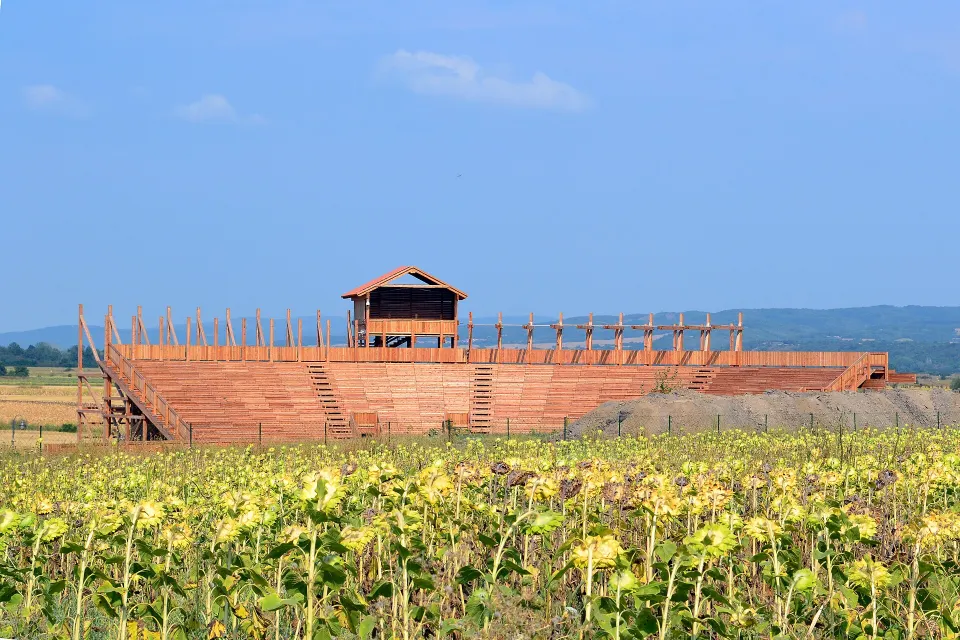
On the site of today's town stood the Roman fort and settlement of Pincum (Pinkum), built in the 1st century AD on the road that connected Viminacium with Golubac. According to the Tabula Peutingeriana, Pincum was a significant fortification and a center of trade, crafts and mining; bricks found here show that units of the Seventh Claudian Legion were stationed at the site. Emperor Hadrian visited the town in person around 117 AD and granted it a special administrative status — it answered directly to the emperor.
The most fascinating detail: Pincum minted its own bronze coins, of which only five specimens survive in the world today — in Vienna, Berlin, London and Belgrade. The Huns captured and burned the town between 441 and 443 AD, and it was rebuilt under Emperor Justinian I. If you want to dig deeper into the Roman heritage of this region, the perfect full-day trip is Viminacium near Kostolac — the former capital of the Roman province of Moesia Superior.
The name "Gradište" is first mentioned in 1381 in Prince Lazar's Ravanica Charter. The town truly flourished after the Ottomans left: under the rule of Miloš Obrenović it grew into the strongest merchant town in the district, in the mid-19th century it became the seat of the Ram county, and by the end of the century it had a hospital, a library, a grammar school and a pharmacy. It was also among the first towns in Serbia to get electricity — as early as 1913. That golden age of trade can still be read from the facades in the town center.
Sights of the town center: Žitni Trg, the town hall and the church
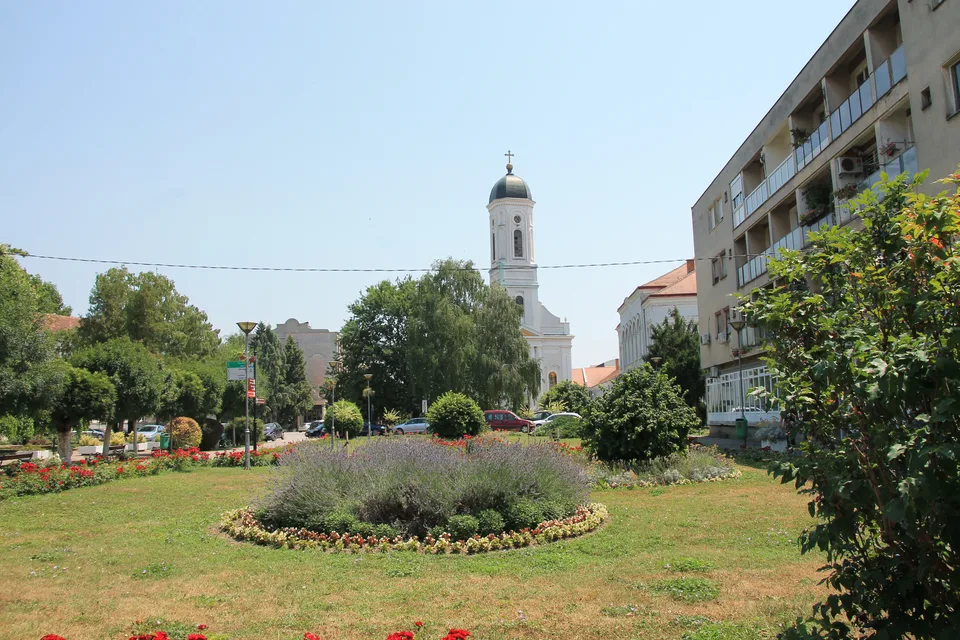
The old core of Veliko Gradište consists of Žitni Trg (Grain Square), the main street Kneza Lazara, the town park and the Danube quay — all within a few minutes' walk of one another, so the tour comes together naturally as an easy circular stroll.
Žitni Trg and the town hall
The square is dominated by buildings from the second half of the 19th century, the finest of which is the Municipal Assembly building (Žitni Trg 1) — the former District Administration with a post office and telegraph, built in 1892 to a design by architect Milorad Ruvidić. Its Renaissance symmetry with Art Nouveau decoration, octagonal central tower and oval corner domes make it one of the most photogenic buildings in the Serbian Danube region; it is protected as a cultural monument.
The Church of St. Archangel Gabriel
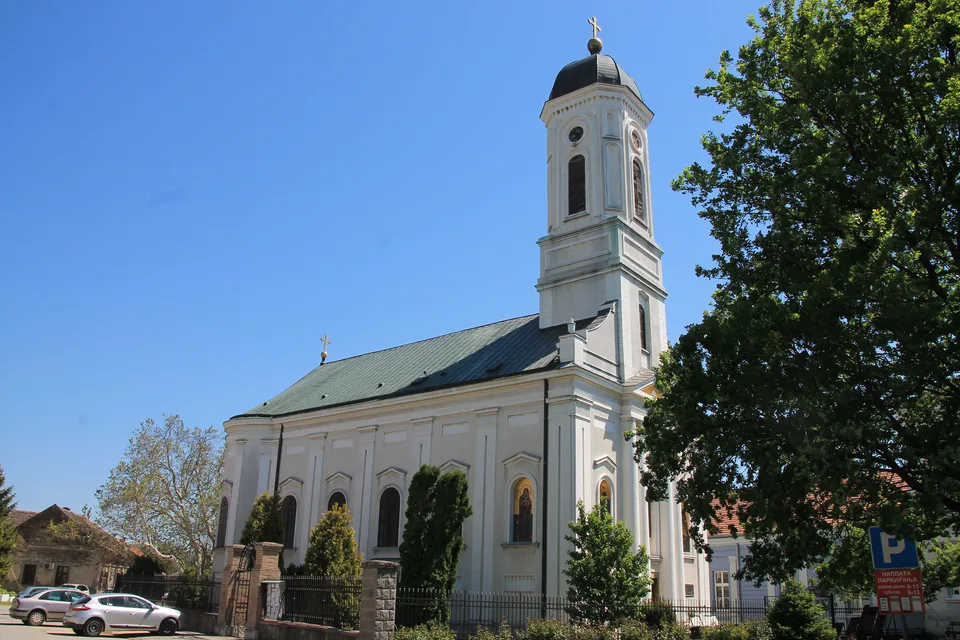
On the main town square stands the Church of the Holy Archangels Michael and Gabriel — popularly known as the Church of St. Archangel Gabriel — built in 1852–1854 on the site of an older place of worship. A single-nave building in the classicist style with a bell tower on its western side, it is also a protected cultural monument, and the parish house keeps icons from the old iconostasis of 1832–1834. Beside the church grows a plane tree around 120 years old, declared a natural monument — a favorite spot for a rest in the shade.
The town park and the National Museum
The town park, laid out in 1908 at the bottom of the main street by the quay, is the true heart of the town: it holds the monument to Vlastimir Pavlović Carevac, a children's playground and a memorial plaque to actress Žanka Stokić, who was born in Veliko Gradište. Not far from there is the Veliko Gradište National Museum, whose permanent exhibition includes an early-20th-century music box that plays six Serbian melodies. Important for planning: at the time of writing, the museum is closed on Mondays and Tuesdays. Art lovers can also visit the "Pigoza" house — a private house-museum, gallery and studio of artist Duško Zeja Jovanović — by prior arrangement (best via its Facebook page).
Veliko Gradište and the Danube: the quay, the Carevac Promenade and the mouth of the Pek
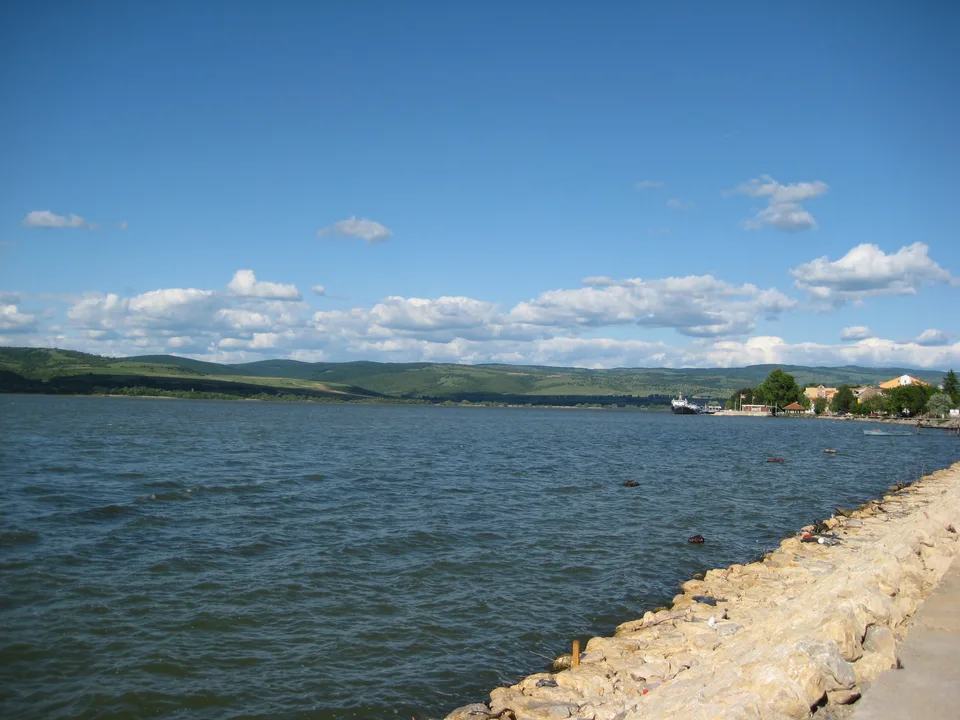
The Danube quay is where the town breathes most beautifully: a wide riverside walkway, benches, views of the Romanian bank and ships sailing toward the Iron Gates. The quay flows naturally into the Carevac Promenade toward Silver Lake, so many guests finish their town tour exactly that way — walking along the Danube back to the lake at dusk, when the river turns golden. If you enjoy that combination of river and lake, compare it with the beach and promenade at the lake itself.
For a quieter walk in nature there is the mouth of the Pek, where the river joins the Danube — a peaceful green oasis on the edge of town, a favorite among anglers and walkers. And if you want to see where the Danube leads next, from here it is an easy trip to Ram Fortress, some fifteen kilometers upstream.
Carevac Days, the August 2 fair and other events
The town's best-known event is Carevac Days (Carevčevi dani) — a folk music festival dedicated to Vlastimir Pavlović Carevac (1895–1965), the violinist and founder of the Radio Belgrade Folk Orchestra, born in the nearby village of Carevac. Held every year since 1995 in early July in Veliko Gradište and the village of Carevac, the festival opens in the town park by the Carevac monument, and its highlight is a competition of young violinists accompanied by the RTS Folk Orchestra. This year's 32nd edition took place from July 1 to 3, 2026; check next year's dates with the "Vlastimir Pavlović Carevac" Cultural Center.
The other big date is August 2, St. Elijah's Day — the patron saint's day of Veliko Gradište — when the great folk fair and the Municipality Days are held. It is the liveliest day in town all year: stalls, music, carousels and streets packed with people. Summer also brings the Fishermen's Nights (mid-July), the Pasuljijada bean-stew festival and the Veliko Gradište guitar festival in August, plus a triathlon and a half-marathon at the lake itself. If you are coming in early July or around August 2, book your accommodation early — that is when seasonal demand peaks.
Practical info: the market, health center, pharmacies and banks
For Silver Lake guests, Veliko Gradište is also the nearest place for all practical needs — at the time of writing, the lake itself has just one ATM and a currency exchange office, and everything else is in town. The town market on Mladena Miloradovića Square, covered and opened in 2016, has 80 stalls of farm produce plus shops for meat, dairy and fish — the perfect place to stock up on local tomatoes, cheese and fruit if you are cooking in your apartment. The green market is open every day, and the main market day is Monday, when the flea market operates as well.
The opening hours in the table below were valid at the time of writing — before you set off, double-check them on the institutions' websites or with the Veliko Gradište Tourist Organization:
| What | Where | Opening hours |
|---|---|---|
| Green market | Mladena Miloradovića Square | daily; summer (Apr 1–Nov 1) 6 am–5 pm, winter 7 am–4 pm |
| Flea market | Mladena Miloradovića Square | Mondays 6 am–2 pm (from 5:30 am in summer) |
| National Museum | town center | Wednesday–Sunday (closed Mon and Tue) |
| Health center | Vojvode Putnika St. | 24/7; emergency line 012/662-591 |
| BENU pharmacy | Kneza Lazara 50/A | 8 am–8 pm |
| Post office | Kneza Lazara 15 | weekdays 8 am–2 pm, Saturdays 8 am–noon |
The Veliko Gradište Health Center is open around the clock, 24 hours a day — good to know for anyone spending a lake holiday with children. There are several pharmacies around it, and the main street, Kneza Lazara, has bank branches and the post office. For lunch after your tour there is a lovely choice of traditional taverns and restaurants — we've gathered our recommendations in the guide on where to eat at Silver Lake and in Veliko Gradište.
Tip: If you want to catch both the market in full swing and the National Museum, don't plan them for the same day — the market is at its richest on Monday mornings, while the museum is closed precisely on Mondays and Tuesdays. Our recipe: on Monday, walk the promenade to the market early, then have breakfast in town; save the museum and the old town core for a cloudy mid-week day, when the beach isn't an option anyway.
Why Veliko Gradište is the perfect base for your holiday
Few places in Serbia offer a combination like this: a lake with a beach and an aqua park, the Danube with a quay and a promenade, and a lively town with a market, a health center and everything you might need — all within walking distance of one another. On top of that, Veliko Gradište is the ideal starting point for exploring the area around Silver Lake: Golubac Fortress, Tumane Monastery, Viminacium, Ram Fortress and the Iron Gates are all within half an hour to an hour's drive, and you'll find a complete list of ideas in our overview of day trips around Silver Lake.
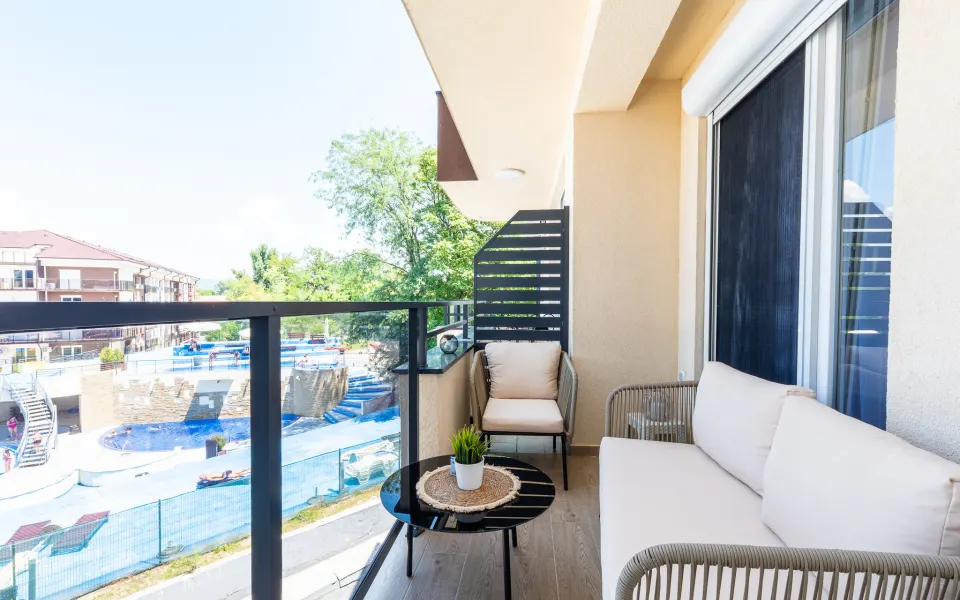
If you are looking for accommodation with both the town and the lake within easy reach, our Silver Lake Residence apartment sits directly above the Aqua Park at Silver Lake — from the private terrace you look straight down at the pools and slides, the promenade is 150 meters away, the main beach 200, and you can reach the center of Veliko Gradište in five minutes by car or in half an hour with an easy walk along the Carevac Promenade. The roughly 40 m² apartment sleeps up to four guests and has a fully equipped kitchen (perfect for whatever you bring back from the Monday market), Wi-Fi, a TV with a PlayStation console and self check-in with a smart lock, with a 5/5 rating on Google and prices from €50 per night. Check available dates in the availability calendar.
And once your half-day trip to town is planned, the rest of your stay falls into place easily: our big Silver Lake guide covers beaches, activities and practical tips, and history lovers should continue along the Danube to Golubac Fortress — the most beautiful medieval fortress on the river.