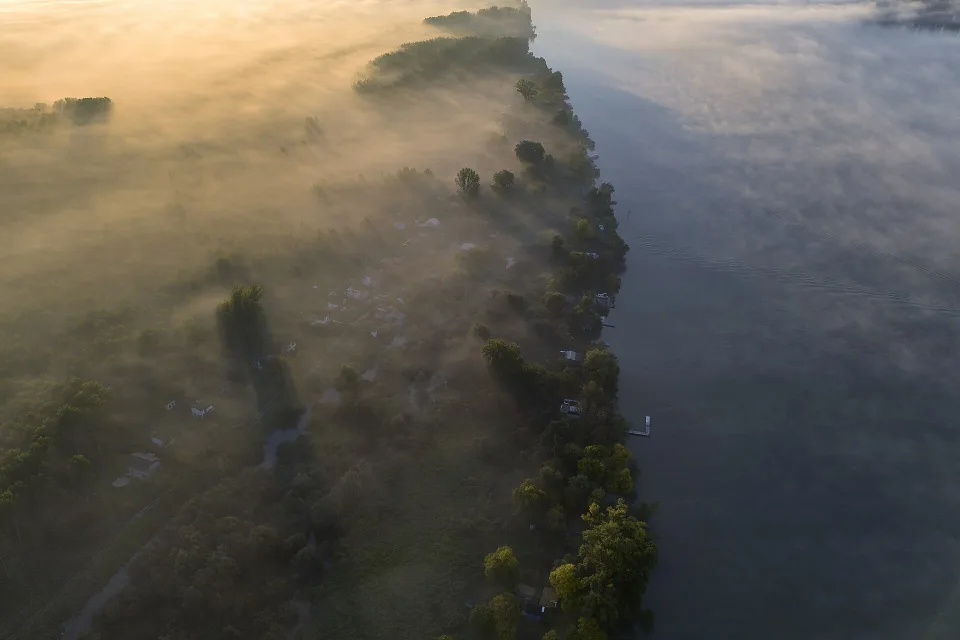
Lepenski Vir — the oldest planned settlement in Europe — sits on the bank of the Danube in the Iron Gates gorge (Đerdap), just over an hour's drive from Silver Lake (Srebrno jezero). If you are spending more than a weekend in the area, this is a trip you shouldn't skip: a settlement more than nine millennia old, the famous fish-faced sculptures, and a drive along one of the most beautiful roads in Serbia. In this guide we've gathered everything you need to plan the day — why the site matters so much, ticket prices and opening hours, how to get there from the lake, and how to combine it all with Golubac Fortress and Donji Milanovac.
Why Lepenski Vir is the oldest settlement in Europe
The story begins in 1960, when Obrad Kujović discovered traces of a prehistoric settlement on a terrace above the Danube. Systematic excavations were led by Professor Dragoslav Srejović of the University of Belgrade from 1965 to 1971, and the finds changed our understanding of European prehistory: 136–138 residential and sacral buildings in seven successive settlements, built one on top of another over several millennia.
Radiocarbon dating places the Lepenski Vir culture between 9500/7200 and 5500 BC — from the early Mesolithic to the Neolithic. The most celebrated phase, the one with trapezoid-shaped houses, dates to 6300–6000 BC. No human settlement had ever used that house form before, and every building, from 1.5 to 30 square metres, followed the same layout, with standardised rectangular hearths. It is precisely this deliberate planning that leads researchers to call Lepenski Vir the first planned settlement — even the 'first city of Europe'.
The site lies within Đerdap National Park, and since 10 July 2020 the wider area has been the Đerdap UNESCO Global Geopark — Serbia's first, covering 1,330 km². Lepenski Vir itself is not on the UNESCO World Heritage List, partly because it was moved from its original location, but it has held the status of a cultural monument of exceptional importance since 1979.
The settlement the Danube forced to move
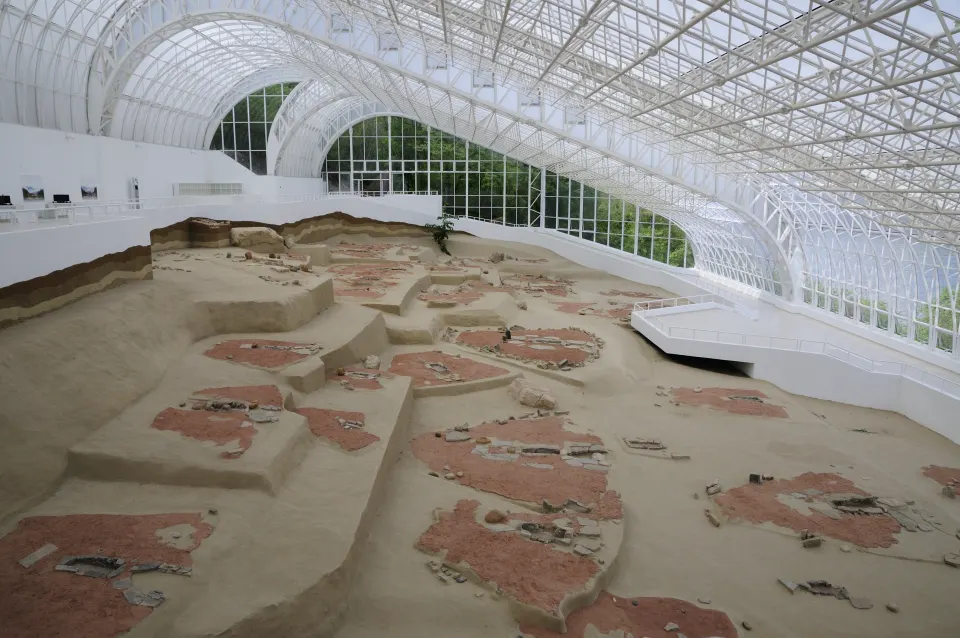
A detail that regularly surprises visitors: today's Lepenski Vir is not where it was discovered. Because of the construction of the Đerdap I hydroelectric dam and the rising river level, the entire site was relocated in 1971 about 100 metres downstream and 30 metres higher up — the original spot now lies some twelve metres below the surface of the reservoir. Since 2011 the site has been sheltered by a modern glass structure, part of the visitor centre.
The sculptures of Lepenski Vir: the Progenitress and the fish ancestors
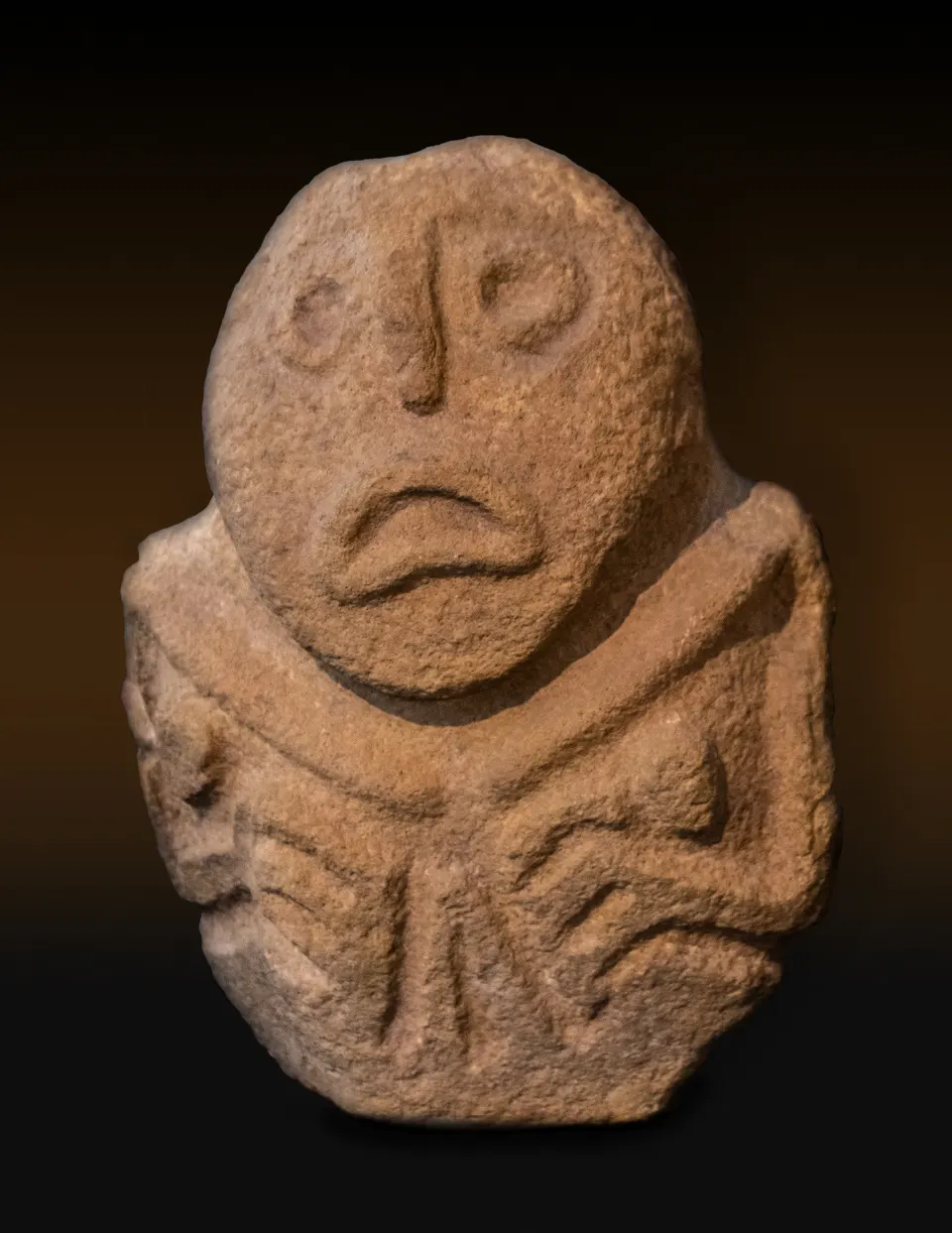
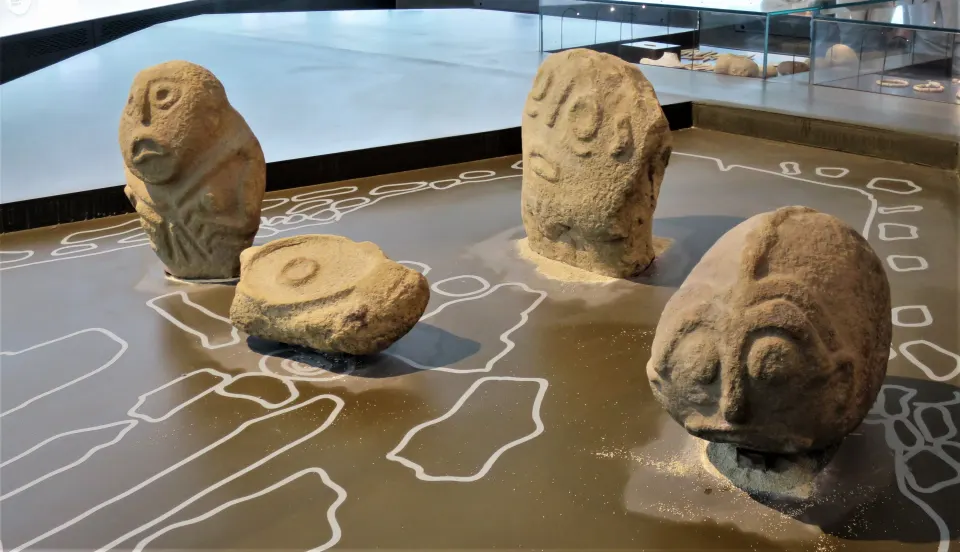
What has made Lepenski Vir famous around the world are its sculptures. A total of 52 were found, carved from river boulders and coarse-grained sandstone — and not as decoration: they were set into the floors of the houses, beside the hearths, as part of the home itself. They are the oldest group of monumental sculpture in Europe.
The most famous is the Progenitress (Praroditeljka, 51×39 cm), the symbol of the site, on which traces of red pigment are still visible today. There are also the Forefather (Rodonačelnik, 52×33 cm), Danubius and the Water Fairy. What they share are fish-like mouths and faces that blend human and fish — most likely an echo of a community that depended on the Danube and its whirlpools for thousands of years.
The Lepenski Vir museum near Boljetin: what to expect
The visitor centre, a branch of the National Museum of Serbia, stands inside the protected complex near the village of Boljetin, just outside Donji Milanovac. A visit starts with an introductory documentary (there is a short screening, plus a longer one of about an hour for the more curious), followed by an exhibition of more than 100 artefacts: tools, jewellery, altars, sculptures and Neolithic pottery, along with a reconstruction of burial customs and a holographic reconstruction of the houses.
The centrepiece, though, is the relocated site itself: under the glass roof you look down on the original floors of the trapezoidal houses, while replicas of the monumental sculptures stand in their original positions — exactly where Srejović's teams found them. Guides and curators work on site, so don't hesitate to ask questions — a tour with a good guide is a completely different experience. And if you're wondering how long a visit to Lepenski Vir takes: allow two to three hours for the film, the museum and the site.
Lepenski Vir tickets, prices and opening hours
According to the latest available information (2024/25), a standard ticket costs 500 dinars, a group ticket (10 or more people) 400 dinars per person, children aged 7 to 15 pay 120 dinars, and school groups 200 dinars per person. Parking is free. The official 2026 price list had not been published online at the time of writing, so call the museum on +381 30 501 501 or +381 62 216 559 before you set off — group visits are announced through the same numbers.
Opening hours follow the length of the day and change from month to month. The schedule in the table below is valid at the time of writing (2024/25 data) — double-check it before you go, for example on poseti-srebrnojezero.rs or by phone:
| Month | Opening hours |
|---|---|
| January | 10 am – 3 pm |
| February | closed |
| March | 9 am – 5 pm |
| April | 9 am – 7 pm |
| May–August | 9 am – 8 pm |
| September | 9 am – 7 pm |
| October | 9 am – 6 pm |
| November | 9 am – 5 pm |
| December | 10 am – 3 pm |
Take special note of February: the museum is traditionally closed for the whole month, so plan a winter visit for another time of year or check in advance.
How to get to Lepenski Vir from Silver Lake
Silver Lake and Lepenski Vir are about 63–66 kilometres apart, which works out at roughly 1 hour 10 to 20 minutes of driving each way. The route is simple and hard to get wrong:
- From the lake, head back to Veliko Gradište and follow the main road along the Danube to Golubac (17.4 km, about 18 minutes).
- From Golubac comes the most beautiful stretch: 46 kilometres of the Đerdap highway through the gorge, right beside the river.
- The turn-off to the site is signposted, about 15 kilometres before Donji Milanovac, near Boljetin — a steep descent then leads down to the car park.
The drive along the Đerdap highway beside the Danube is an experience in itself: the road threads between cliffs and river, with views opening up at every bend, so allow for a photo stop or two. From the free car park, a paved path of 400–450 metres leads to the visitor centre — an easy walk, but there is no railing, so keep small children by the hand.
Tip: In summer, leave the lake right after breakfast and be at the site before noon. The excavation sits under a glass structure and, despite the air conditioning, a real greenhouse effect can build up in the hottest hours — and in the morning you'll enjoy both the film and the site in peace, before the tour groups arrive.
A one-day trip: Golubac, Lepenski Vir and Donji Milanovac
If you're wondering what to see in the Iron Gates in a single day — these three stops follow one another naturally. Golubac Fortress greets you at the very entrance to the gorge, some twenty minutes from the lake, so it would be a shame to drive straight past it. Under the official 2026 price list, a green-zone ticket costs 900 dinars for adults, pensioners pay 500, children aged 7 to 18 pay 250, pupils and students 350, while children under 7 and visitors with disabilities enter free; parking, the Visitor Centre and the Archaeological Park are included in the price. Tours of the fortress's upper zones are also available (1,300–2,000 dinars, though the red and black zones may only be entered with a guide). The fortress is normally closed on Mondays, so plan the trip for another day of the week, and check the opening hours and details on the fortress's official website.
Donji Milanovac lies some fifteen kilometres beyond the site and makes a handy stop for lunch and a break — there is even a hotel named after Lepenski Vir, and the EuroVelo 6 cycling route passes through town. Our rough plan for the day: leave the lake around 9 am, spend an hour or two at the fortress, arrive at Lepenski Vir around noon, have lunch in Donji Milanovac in the afternoon, and drive back along the river road as the sun sets over the Danube.
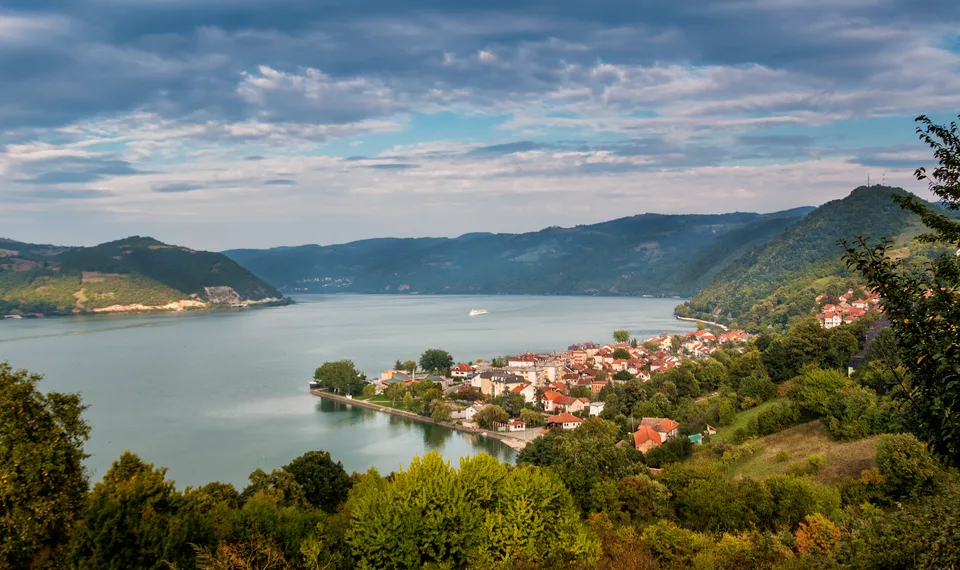
If you would rather experience the Iron Gates from the water, the Silver Star boat sails from Silver Lake on a four-hour cruise to Golubac Fortress (booking is essential) — it does not go as far as Lepenski Vir, so you will still need a car for the site. We cover this in more detail in our article on cruising the Danube through the Iron Gates gorge.
Lepenski Vir with kids and practical tips
Lepenski Vir also works well as a family outing: children are usually most taken with the holographic reconstruction of the houses and the introductory film, and a two-to-three-hour visit is perfectly manageable even for younger schoolchildren. Take care on the path from the car park (it is not fenced) and on the steep descent — comfortable shoes are a must for everyone. You'll find more ideas for families in our guide to Silver Lake with kids.
And three small lessons from experience: don't skip the introductory film, because without it the site can look like 'just' house floors in the sand; bring water for the walk from the car park; and phone ahead to check the opening hours if you're travelling outside the main season — a call is the surest way to avoid a surprise at the door.
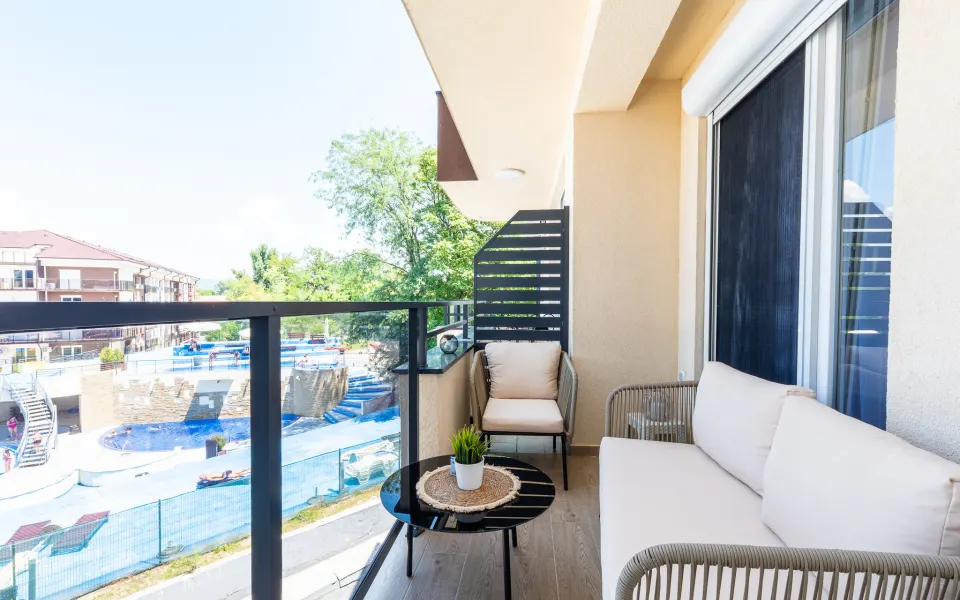
For a base for your Iron Gates adventures you'll want comfortable accommodation at Silver Lake — guests of the Silver Lake Residence apartment, directly above the aqua park and about two hundred metres from the main beach, usually save this trip for the middle of their stay: morning coffee on the private terrace, a full day in the gorge, and back in the evening for a stroll along the promenade or a round of PlayStation for the kids. The apartment sleeps up to four guests, has a fully equipped kitchen and smart-lock self-check-in with no waiting for a host, is about an hour and a half's drive from Belgrade, and rates start from 50 euros per night — check available dates in the availability calendar.
Lepenski Vir is just one of the reasons to spend several days in this corner of Serbia: our round-up of day trips around Silver Lake also covers Viminacium, Ram Fortress and Tumane Monastery, and if you're still planning your stay, start with our big Silver Lake guide — prehistory and the beach go together surprisingly well.